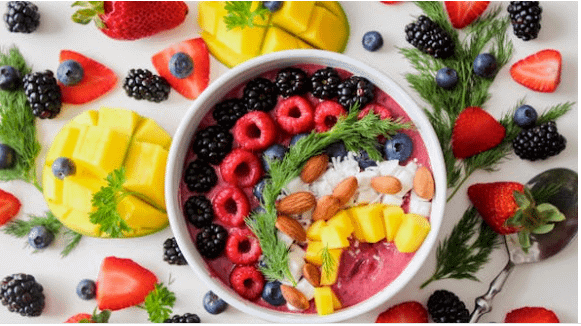
Where the superfood word generated?
The earliest recorded example may have taken place, not from those who formally study foods such as nutrition scientists and dietitians. American Medical Association.
The food industry certainly has the incentive to market a product as a superfood, which boosts sales. According to Mintel research, in 2015 there was a 36% increase globally in the number of foods and beverages launched that were labeled as a “superfood,” “superfruit,” or “super grain with the United States leading those product launches., Quinoa, other ancient grains, chia seeds, kale enjoyed consistent sales growth in 2017
1. VEGETABLES
Dark leafy green vegetables and nutrition containing a wide range of vitamins and minerals and are low in calories.
Leafy greens like spinach and kale are high in vitamins A, C, E, and K, iron, potassium, magnesium, and calcium. They also have beta-carotene, and lutein which are important for eye health
Raw vegetables provide vitamins, minerals, fiber, and phytonutrients. Every health authority recommended 5 to 6 serving bowls of vegetables but we need to eat big ones with 2 meals.
Cruciferous vegetables contain sulfurous compounds called glucosinolates. These are beneficial to health. Glucosinolates regulate cell pathways and genes and may have anticancer and anti-inflammatory effects.
The following is a list of cruciferous vegetables that people can aim to eat every day:
- Broccoli
- Cabbage
- Radish
- Cauliflower
- Broccoli sprout
- Brussel sprouts
Number one is broccoli several unique antioxidants and compounds can aid in cleaning excessive estrogen (which encourages higher testosterone levels and increases muscle growth) toxins from the body not limited to fighting against cancer but also helping muscle growth. Broccoli also contains Vitamin C which is good for the immune system. It also has zinc which helps protein synthesis.
Health experts including the American Heart Association (AHA)Trusted Source recognize the Mediterranean diet as one of the healthiest ways to eat. Eating a range of different colored vegetables every day helps ensure an intake of a wide range of phytonutrients, which are beneficial plant compounds.
Other than that, keep carrots and green vegetable beans. Carrots are an excellent source of Vitamin A and Beta-carotene. Along with these nutrients, it is a good source of Vitamin C, Lutein, Zeaxanthin, Vitamin K, dietary fiber, etc. vegetable provides very low calories per serving and hence a best friend of dieters. As per NIN, 100 gm of red carrot will provide 38 kcal, 6.7 g carbohydrates, 1 gm protein, 0.5 g of fat, 5 gm of total fiber, 7 mg of Vitamin C, 451 mcg Vitamin A, and 2706 mcg of beta carotene.
Green beans are a rich source of vitamins A, K, and C and folic acid and fiber. They help to manage depression and bone health.
According to the United state of Agriculture(USDA), one cup of beans around 150 grams gives 28 calories,0.55 grams of fat,5.66 grams of carbohydrates,2.6 grams of fiber,1.94 grams of sugar,1.42 of protein
2. FRUITS
Berries
Consuming berries can help people achieve some of their daily nutrient goals.
2015 study shows that 100 of eating blueberries, raspberries, and blackberries could provide more than 50% of someone’s manganese, vitamins such as vitamin C and folate, and phytochemicals
Berries are excellent sources of bioactive compounds such as phenolic acids, flavonoids, and anthocyanins. These compounds act as antioxidants and may help prevent cardiovascular disease and lower the risk of some cancers.
- blueberries
- blackberries
- raspberries
- strawberries
- cranberries
Avocados or “alligator pears” are known for their creamy smooth flesh and bumpy skin. Although not sweet, avocados are botanically classified as a fruit with a large berry and single center pit, grown from the Persea americana tree.
A whole medium avocado contains about 240 calories, 13 grams carbohydrate, 3 grams protein, 22 grams fat (15 grams monounsaturated, 4 grams polyunsaturated, 3 grams saturated), 10 grams fiber, and 11 milligrams sodium. Along with their low sodium levels, avocados contain no cholesterol.
3. NUTS
Research indicates that eating nuts every day can be beneficial for health.
Walnuts are an excellent source of several vitamins and minerals. These include copper, folic acid, phosphorus, vitamin B6, manganese, and vitamin E. Walnuts are one of the richest dietary sources of antioxidants. These include ellagic acid, ellagitannins, catechin, and melatonin.
A 1-ounce (30-gram) serving of walnuts — about 14 halves — provides the following nutrients (2Trusted Source):
- Calories: 185 Water: 4% Protein: 4.3 grams Carbs: 3.9 grams Sugar: 0.7 grams Fiber: 1.9 grams Fat: 18.5 gram
Almond: Almonds are rich in protein, fiber, vitamin E, calcium, copper, magnesium, and riboflavin. They are also a source of iron, potassium, zinc and B vitamins, niacin, thiamine, and folate. A 30-gram serving has 13g of healthy unsaturated fats and 1g of saturated fat.
Per 30-gram serving, almonds boast more vitamin E:7.7mg, calcium: 80mg and riboflavin:0.3mg than any other nut. Almonds also provide 6 grams of plant protein per 30 gm serving. Almonds are naturally salt-free/sodium-free and low in sugars.
4. OILS
a. Coconut oil
Coconut oil is become my household staple. It benefits our health and skin in endless way .
It is a replacement for bad fats in our diet.
Provides MCT. Coconut oil is 64% medium-chain triglycerides (MCTs), which quickly burn as energy rather than stored in the body as fat (especially belly fat) like long chains.
Increases efficiency EPAs: Much has been written about the importance of essential fatty acids (EFAs) in the diet; your body cannot manufacture EFAs itself and therefore must receive them from food
Other than this is it helps to improve digestion, fights against bacteria and viruses, and provides lauric acid that improves the immune system, Coconut oil does not create transfat when heated.
b. Ghee :
it is an essential part of Indian cooking called clarified butter.In high temperatures, it does not go rancid. It is also rich in vitamins A,E, and CLA(source of the grass-fed cow)
Ghee is also rich in butyric acid (a short-chain fatty acid ), which can decrease inflammation and help improve the digestive system.
c. Olive oil
Olive oil is a key ingredient in the Mediterranean diet. Olives are rich in polyphenols. These act as antioxidants, protecting the body against oxidative damage.
Although scientists need to conduct more human research, the authors of this study suggested that people who consume less olive oil may benefit from increasing their intake.
Extra virgin and unfiltered olive oil contain the highest levels of beneficial polyphenols. However, quality olive oil is usually more expensive, so people can reserve this for drizzling over salads and vegetables. Using standard olive oil for cooking may be more cost-effective.
5. Organic EGGS or Pasteurized eggs
Eggs are a popular breakfast food. They are nutritious and contain high-quality protein.
Some people think that eggs are unhealthful because of the amount of cholesterol they contain. However, research showed that the dietary cholesterol from eggs has only a minor impact on bad cholesterol, or low-density lipoprotein (LDL), in the blood.
Eggs are also a rich source of vitamins, including A, E, and K, and a range of B vitamins, such as B12(energy), riboflavin, and folic acid. Eggs also contain all eight essential amino acids needed for optimal muscle recovery and valuable minerals like calcium, zinc, and iron. In addition, eggs contain cholesterol, but it is generally accepted that dietary cholesterol does not raise blood cholesterol levels.
6. Coffee
Drinking coffee with breakfast is popular due to its caffeine content. Coffee also offers other health benefits due to its antioxidants, which help fight inflammation.
One review from the American Diabetes Association suggests that drinking either regular or decaffeinated coffee could decrease the risk of developing type 2 diabetes.
The researchers also suggested that some components of coffee improve glucose metabolism.
However, adding cream or sugar will reduce the beneficial effects of coffee. It is best to reduce or avoid adding sugar to coffee and choose nonfat or plant-based milk instead of cream.
These are the superfoods I eat every day in my diet. If you eat something else as a superfood then pls mention it in the comment.